Self Employment Tax Deduction
The self-employment tax deduction, often misunderstood as a simple reduction in tax liability, functions as a critical component of the U.S. federal tax framework that reflects both the structural complexity of the individual income tax system and the evolving nature of labor markets. At its core, the deduction is not a direct tax break but rather a mechanism for offsetting the employer-equivalent portion of Social Security and Medicare contributions that self-employed individuals are required to pay. This is distinct from the standard deduction or itemized deductions, which reduce taxable income; the self-employment tax deduction reduces the self-employment tax base itself, thereby mitigating the effective tax burden on net earnings from self-employment.
As of the 2024 tax year, the self-employment tax rate stands at 15.3 percent, composed of 12.4 percent for Social Security (on earnings up to the wage base limit of $176,100) and 2.9 percent for Medicare (on all earnings, with an additional 0.9 percent Medicare surtax applicable to individuals with income above $200,000). The deduction for self-employment tax is calculated as 70 percent of the net self-employment income, effectively reducing the taxable base for the 15.3 percent tax. This structure is codified under Internal Revenue Code Section 1402(a) and has remained substantively unchanged for decades, though its economic implications have shifted significantly due to labor market transformations and fiscal policy adjustments.
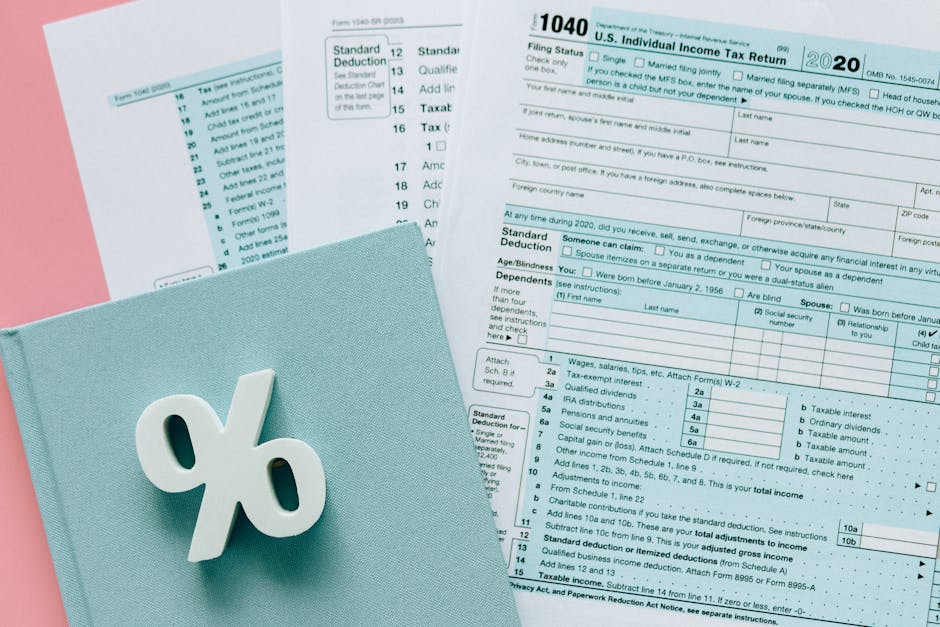
From a compliance standpoint, the Internal Revenue Service (IRS) has emphasized consistent reporting through Form 1040, Schedule SE, which must be filed by individuals with net earnings from self-employment exceeding $400. The threshold remains unchanged since 2011, a decision that has drawn scrutiny from policy analysts concerned about the growing informal economy and gig work, where income thresholds are often crossed incrementally. The IRS’s enforcement priorities, as outlined in its 2024 Strategic Plan, continue to focus on high-income taxpayers and digital economy transactions, with self-employment income being a key area of audit risk, particularly in cases involving underreporting or misclassification of independent contractors.
The macroeconomic context further complicates the interpretation of this deduction. The rise of the gig economy, accelerated by digital platforms and post-pandemic labor reallocation, has led to a significant increase in self-employment activity. According to the U.S. Bureau of Labor Statistics, self-employment as a share of total employment has hovered around 7.5 percent since 2020, up from 6.8 percent in 2019. This shift has implications for the design and equity of the self-employment tax structure. Unlike employees, who have their Social Security and Medicare contributions split between employer and employee, self-employed individuals bear the full 15.3 percent burden. The 70 percent deduction serves as a partial offset, but it does not fully align with the employer-employee parity that underpins the broader Social Security system.
This structural asymmetry raises questions about intergenerational equity and fiscal sustainability. As more individuals transition into self-employment particularly in sectors with lower average earnings there is a potential for reduced Social Security contributions relative to benefits received, especially if these workers are less likely to accumulate sufficient credits for full retirement benefits. Moreover, the deduction does not adjust for inflation or wage growth, meaning its real value has eroded over time. In 1980, the 70 percent deduction represented a more substantial offset relative to the average self-employed worker’s income; today, with median self-employment earnings estimated at approximately $45,000 annually, the deduction reduces the tax base by roughly $31,500, translating to a tax savings of about $4,800. However, this savings is not guaranteed to be realized if the individual’s net earnings fall below the $400 threshold or if they are subject to the additional Medicare surtax.
From a policy perspective, the self-employment tax deduction is embedded within a broader fiscal architecture that includes the earned income tax credit, the child tax credit, and various business expense deductions. These elements collectively shape the effective tax rate for small business owners and independent contractors. Recent legislative proposals, such as those considered in the 2023 House Ways and Means Committee’s Small Business Tax Relief Act, have explored expanding the deduction or introducing a targeted credit for self-employed individuals with lower incomes. However, such proposals face significant political and technical hurdles, particularly concerning revenue neutrality and administrative feasibility.
The interaction between the self-employment tax deduction and capital markets is also noteworthy. For entrepreneurs and small business owners, the deduction can influence decisions regarding business structure whether to operate as a sole proprietorship, S-corporation, or LLC. In some cases, electing to form an S-corporation allows for a portion of income to be classified as a reasonable salary, which is subject to payroll taxes, while the remainder is treated as distribution and exempt from self-employment tax. This strategy, while legally permissible, requires careful documentation and IRS scrutiny, especially under the agency’s heightened focus on “economic substance” in tax planning.
Looking ahead, the self-employment tax deduction will likely remain a focal point in debates over tax reform, labor policy, and social insurance sustainability. The growing prevalence of remote work and platform-based employment may necessitate a reevaluation of how self-employment income is defined, taxed, and subsidized. The IRS’s recent guidance on digital asset reporting and the use of third-party payment platforms suggests a recognition that traditional definitions of self-employment are becoming increasingly inadequate. Moreover, the Biden administration’s 2024 budget proposal includes a modest expansion of the deduction for low- and moderate-income self-employed individuals, signaling a potential shift toward more progressive treatment of this tax category.
In conclusion, the self-employment tax deduction is not merely a technical provision in the tax code but a policy instrument with far-reaching economic consequences. Its design reflects historical compromises between administrative simplicity and fiscal equity, but its continued relevance in a dynamic labor market demands careful scrutiny. As the U.S. economy evolves, so too must the mechanisms that govern how self-employed individuals contribute to and benefit from the social insurance system. The challenge for policymakers lies not in eliminating the deduction, but in recalibrating it to ensure fairness, sustainability, and alignment with the realities of modern work.
Related Articles